No Pants, No Problem: How an Adult Podcast Learns to Pay Its Rent
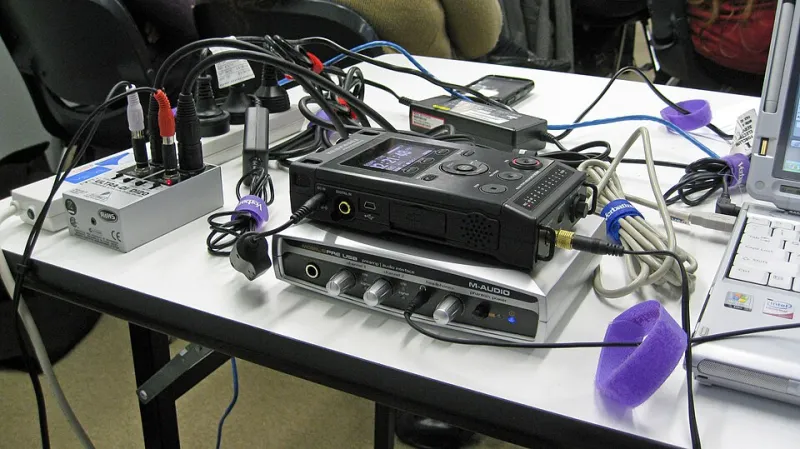
Photo: Stephan Ridgway from Sydney, Australia, CC BY 2.0, via Wikimedia Commons
The mic is hot, the coffee is cold, and everybody in the room is wearing exactly nothing. Welcome to the business meeting.
For all the jokes about nudity being the product, the actual product of an adult-adjacent podcast like ours is attention — and attention, as every podcaster learns around episode twelve, does not automatically convert into rent money. So how does a show where nobody wears pants convince anybody to write a check?
We spent three months talking to indie hosts, media buyers, and one very patient brand manager to map the weird economics of advertising on a naked podcast. What we found: some brands slam the door, some brands sneak in through the side, and a surprising few shove cash through the mail slot.
The Brands That Ghost You
Start with the rejection pile, because it's bigger than you'd think.
Razor companies are the great irony of adult-adjacent media. You'd assume a show full of men discussing grooming, body hair, and manscaping disasters would be a razor brand's dream demo. Nope. Most mainstream grooming brands have strict "brand safety" guidelines, and full nudity — even tasteful, conversational, non-sexual nudity — trips every filter their agency uses. One host told us a razor company's media buyer literally replied, "Love the show, love the mission, legal said no." That's the whole email.
Same story with most CPG stuff: deodorant, underwear, meal kits. Anything where the marketing department has to imagine their product adjacent to a naked guy talking about his insecurities in a sauna, the answer comes back as a calendar invite that never gets accepted.
Insurance and finance brands? Forget it. Their compliance departments treat the word "nude" in a show description the way a cat treats a bathtub.
The Brands That Lean In
Now the fun part. Certain advertiser categories don't just tolerate nudity content — they actively hunt for it.
VPNs are the lifeblood. Privacy-obsessed brands figured out years ago that audiences comfortable discussing taboo topics are also audiences who care about digital privacy. A host reading a VPN ad in nothing but headphones isn't a conflict; it's a bit. And the conversion numbers, according to two hosts we spoke with, outperform their sports podcast placements by a wide margin.
Sexual wellness and intimacy brands were early adopters and remain the anchor sponsors. DTC lube, toys, and couples' apps don't have a "brand safety" problem with nudity — nudity is their entire reason for existing. These deals tend to be the easiest to close and the most fun to record, mostly because the ad reads turn into additional segments.
Dating apps with an edge, adult-adjacent subscription platforms, and increasingly alcohol-adjacent DTC brands (canned cocktails, mostly) fill out the middle of the sponsor roster. One media buyer put it plainly: "If your customer already watches people be vulnerable on the internet, our product fits."
The Patreon Ladder, Explained by Tiers
Direct support is where adult-adjacent shows actually stabilize, and the tier structure has become a genre of its own.
A typical ladder looks like this: $5 gets you the bonus segment and early access. $10 gets you the after-show, which is usually just the hosts eating snacks and being more honest than the main feed allows. $25 gets behind-the-scenes video — and yes, on a show like ours, that means exactly what you think it means, within platform rules. The top tier, usually $50-ish, gets you a name-read, a monthly live stream, and occasionally the chance to submit a question that will absolutely make the hosts uncomfortable.
The dirty secret: the risqué tiers convert better but churn faster. The $5 listeners who show up for the conversation are the ones who stay for three years. The $50 tier is a revolving door of people who came for one specific thing, got it, and left. Smart shows price accordingly and never build the business on the top rung.
From Garage to Grocery Money: One Show's Arc
Consider a composite — call it the journey of a typical two-host indie show.
Months 1–8: Garage setup, a $99 mic, zero revenue. Downloads in the low hundreds. The hosts pay for hosting out of pocket and argue about whether to take theVPN sponsor outreach email seriously.
Months 9–18: The audience crosses a few thousand downloads per episode. First sponsor: a sexual wellness DTC brand offering $800 a month for mid-rolls. It feels like a fortune. It is not a fortune. But it covers the mic, the hosting, and — crucially — signals to other brands that the show is "sponsorable."
Months 19–30: Patreon launches. The tiers climb. A VPN deal lands at $1,500 a month. The hosts quit arguing about money because there's finally money to argue about. A part-time editor gets hired, which is the real milestone, because it means the show survives even if a host gets the flu.
Year three: Roughly 60% Patreon, 40% sponsorships. Live show tickets start contributing. Nobody's buying a boat, but the show pays its own bills, which in indie podcasting is the definition of winning.
What Nobody Tells You
The biggest lesson from every host we talked to: the nudity is the least commercial part of the show. Advertisers aren't buying naked — they're buying trust. A listener who trusts a host enough to hear them talk honestly about their body will trust them about a VPN, a razor, a cocktail, whatever. The skin is the differentiator. The relationship is the product.
Also: get everything in writing, read the platform's terms of service twice, and never let a sponsor dictate editorial — the audience smells it instantly, and on a show built on radical honesty, a phony ad read costs more than the check.
Stay naked, stay honest, and invoice on time.