Read the Fine Print Before the Robe Drops: What Podcast Guests Actually Sign
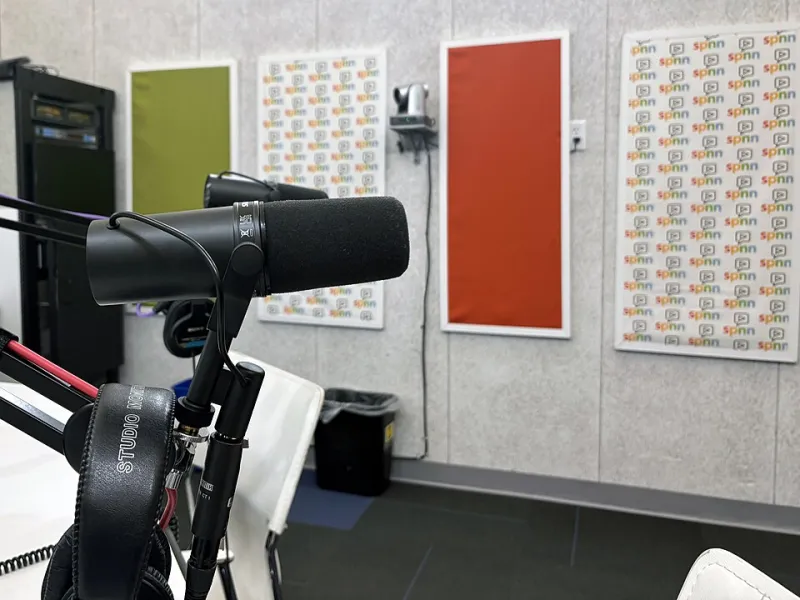
Photo: Myotus, CC BY 4.0, via Wikimedia Commons
Here's what nobody tells you about being a guest on a show like ours: the hardest part isn't the robe coming off. It's the fifteen minutes before that, when you're sitting in a studio in Burbank or a spare bedroom in Portland reading a document that uses phrases like 'likeness reproduction' and 'irrevocable content license' while a producer refills your coffee.
We've had dozens of guests on over the years — first-timers, nudist resort regulars, adult performers, a school bus driver who asked us to call him 'Dale from Ohio' — and every single one of them signed something. So we figured it was time to pull back the curtain on the paperwork itself. Because if you're thinking about stripping down on a mic someday, you should know what you're agreeing to.
It Starts With a Consent Form That's Longer Than You'd Think
The core document is the appearance release, and it's not the one-page waiver you'd sign before renting jet skis. A solid release for adult-adjacent content covers audio, video, photography, promotional clips, social media excerpts, and — this is the part that surprises people — derivative works. That last one means if a clip of you goes viral and somebody turns it into a TikTok remix, the show's license covers it.
'Guests always ask why it's so long,' says a producer at a competing men's lifestyle show who asked to remain anonymous, which, fair. 'And the answer is because adult content lives in a legal gray zone. We're not producing obscenity, we're producing conversation. But the paperwork has to be bulletproof anyway, because the stakes for getting it wrong are lawsuits, not just awkwardness.'
The key sections to actually read: the scope of use (where your voice and image can appear), the revocation terms (whether and when you can ask for a takedown), and any morality or context clauses that promise your segment won't be edited to imply things you didn't say.
The 'Dale From Ohio' Clause: Anonymity Is a Negotiable Feature
Not everyone wants their bare-all moment attached to their government name. Most reputable shows offer some version of an anonymity rider — a pseudonym, a voice modification, or in some cases audio-only with no photo attached.
But here's the catch guests don't always grasp: anonymity is a promise, not a guarantee. If your coworkers recognize your laugh, or your voice, or the story about the fishing trip in the Ozarks that only you tell, the show isn't liable for being recognizable. Producers call this the 'identifiability problem,' and it's why many releases include language explicitly stating that anonymization is best-effort, not bulletproof.
One guest told us he requested a pseudonym because he manages a regional sales team in the Midwest. 'I did the whole episode as Hank,' he said. 'Two weeks later my buddy texts me a link and says, buddy, that's your laugh.' His employer never found out. But it was close.
When Your Boss Googles You: The Aftermath Nobody Plans For
Which brings us to the scenario every guest quietly worries about. Employment law in the US is messy here — most states are at-will, meaning an employer can let you go for lawful off-duty conduct they find objectionable, with some exceptions in states like California and New York that have stronger off-duty activity protections.
Smart shows now include a pre-appearance checklist: a conversation about the guest's employment situation, a suggested waiting period before promotion, and sometimes an option to delay publication. A few producers we spoke with offer a 'cooling off' window — the episode is recorded but held for thirty days, in case the guest wakes up in a cold sweat and wants out.
Not every show does this. If a producer won't talk to you about takedown policy before you sign, that's your answer about the producer.
The Fine Print Protects Both Sides — If You Read It
There's a temptation to treat these documents as adversarial, but the good ones are genuinely mutual. The show needs protection from a guest who records the session and posts it themselves; the guest needs protection from being quoted out of context or having their segment clipped into something they never agreed to.
Our advice, learned the hard way over years of production: ask for a copy of the release before recording day, read it sober, and ask questions. Any producer worth stripping down for will walk you through it. The robe is optional. The informed consent isn't.